
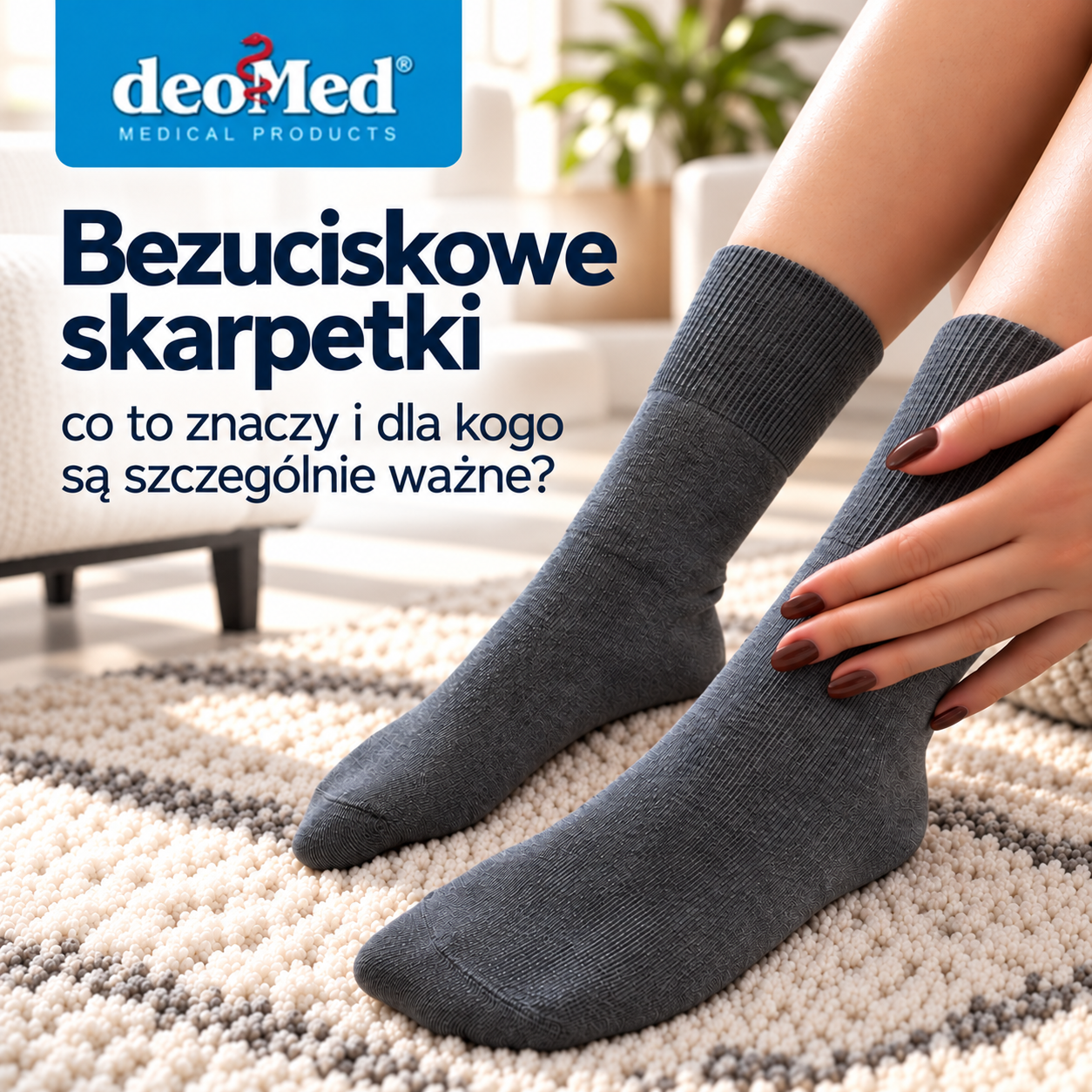
Non-binding socks - what does it mean, and who are they especially important for?
A red mark around your ankle after taking off your socks? Deep impressions left by the cuff? A feeling of tightness at the end of the day?
A sock stays in direct contact with your skin for many hours. If its cuff is too tight, it can cause localised pressure, indentations and irritation. Sometimes, this simply means discomfort. However, for people with diabetes, reduced sensation, circulation problems, swollen legs or particularly sensitive skin, this pressure may contribute to health problems.
That is why, when choosing socks, it is worth considering their construction as well as their colour and fabric.
Why can an overly tight cuff be a problem?
The clearest sign that something is wrong is a mark left on your leg after taking off your sock. A cuff that grips the skin too tightly also creates a noticeable feeling of pressure. If this happens, it is worth checking whether your socks fit properly. Why does this matter?
Diabetes and neuropathy
People with diabetes should pay particular attention to the condition of their feet. Diabetes can lead to neuropathy, or nerve damage, which can reduce the ability to feel pain. In practice, this means that a graze, blister or skin injury may not be noticed straight away, while any accompanying circulation problems can make wounds harder to heal.
Swollen legs and feet
Swelling changes the circumference of the leg. A sock that seems to fit well in the morning may start to feel tighter around a swollen ankle or calf after a few hours. An overly tight cuff can then dig into the swollen tissue, causing further discomfort.
Sensitive skin
If your skin is prone to redness, chafing or irritation, it is worth reducing unnecessary sources of friction and pressure. In this case, a wide cuff may matter, along with the seam construction, fabric and fit of the sock.
Older people
Ageing can bring circulation problems, swelling, changes in skin sensitivity or difficulty putting on clothing independently. When choosing socks for an older person, it is therefore worth checking that the cuff is not too tight and that the socks are easy to put on.
What are non-binding socks?
Non-binding socks are designed to stay in place while walking without creating unnecessary pressure around the ankle and calf.
Non-binding does not mean loose. What matters most is the cuff’s special construction, elasticity, width and fit around the leg. Specialised manufacturing techniques combine stretch and a comfortable fit with the ability to keep the sock securely in place. It is therefore worth looking beyond the manufacturer’s use of the term “non-binding” and paying particular attention to how the cuff is made.
How do you choose good non-binding socks?
Before buying, ask yourself a few simple questions:
-
Does the cuff leave deep marks on your skin?
If so, look for a different style.
-
Does the sock stay in place?
Non-binding should not mean loose.
-
Do the fabric and construction meet your needs?
Someone who wears socks for a few hours may need different features from someone who wears them all day.
-
Can you feel the seam?
If you have sensitive skin, this detail may be particularly important.
-
Have you chosen the right size?
A sock that is too small can stretch the fabric too tightly and increase the feeling of pressure.
-
Do you have any health conditions affecting your legs or feet?
If you have diabetes, reduced sensation, vascular disease, chronic swelling, ulcers or other foot problems, it is worth consulting a doctor or specialist when choosing a suitable product.
Your socks matter
Socks are one of those items of clothing we tend to notice only when they start causing discomfort: the cuff leaves a mark, the seam rubs, the fabric makes your feet too hot, or the sock slips down as you walk. A well-designed sock should, above all, keep you comfortable throughout everyday wear.
Because sometimes, the quality of a sock comes down to what you do not feel… even after hours of wear.