
Children foot - why choosing the right socks is so important
Did you know that the condition of your child's feet can affect their future health and quality of life? In the first years of development there are many new skills — from crawling through first steps to intense play and physical activity. It is easy in all this to forget how important it is to g...
Did you know that the condition of your child's feet can affect their future health and quality of life? In the first years of development there are many new skills — from crawling through first steps to intense play and physical activity.
It is easy in all this to forget how important it is to give delicate feet proper protection. The right socks can effectively support foot development and prevent minor injuries that — despite their small scale — can have noticeable consequences later in life.
Why are socks so important?
The basic role of socks is to protect the foot from chafing and cold. However, their importance goes far beyond this function. A child's foot is still forming: with inappropriate clothing it is easy to get micro-injuries and compression that can disturb circulation. Hence the growing popularity of specialist models for the youngest — seamless, non-compression, made from high-quality yarn and often enriched with antifungal and antibacterial properties.
The key to healthy feet
Children's feet differ from adults' feet in proportions and shape. Bones are soft and skin is thinner, so even minor factors can cause irritation or lead to developmental abnormalities. A seam around the toes can be a source of discomfort, especially when a child spends most of the day actively. A too tight cuff can cause local swelling, reduce blood flow and cause numbness.
Benefits of combed cotton
What should you look for when choosing socks? First, the type of material. Combed cotton is soft and durable. The process of "combing" fibres removes short, inferior threads, leaving only strong, smooth ones. Children's feet appreciate such gentleness, especially when combined with additional ventilation that helps wick moisture. This reduces the risk of skin overheating and excessive sweating, which can promote infections.
Antibacterial and antifungal properties
An active child's lifestyle means feet often stay in closed shoes during the day. Moisture combined with warmth creates ideal conditions for bacteria and fungi. A special finish helps limit the growth of unwanted microorganisms. As a result, the child less often struggles with irritation or infections, and the risk of unpleasant odour is significantly reduced.
Non-compression cuff in practice
Many adults know the feeling of a too tight sock that leaves a mark on the skin after a few hours. For a child the consequences of such compression can be more serious. When looking for the right product, make sure the upper part of the sock is elastic and does not block blood flow. The most desirable models balance fit and freedom of movement well. Thanks to this a child can run and jump without restrictions.
How to care for socks so they last longer?
Even the best material quality requires proper care. Children's socks are usually recommended to be washed at around 40°C. Too hot water can weaken fibres and cause the construction to lose its properties. It is also better to avoid strong bleaches that damage delicate yarn and can limit antibacterial finish effectiveness. Drying is best done naturally, for example on a room airer, to avoid putting additional stress on fibres.
Colour and pattern matter too
Children pay attention to how clothes look, so an attractive pattern and favourite colour can determine whether a child willingly puts on a particular pair. Fortunately, specialist socks come in a rich range of colours — from pastels to intense, cheerful shades. This makes it easier to encourage a child to wear products that support foot health while pleasing the eye.
Is high quality worth it?
Parents often wonder whether to invest in products more expensive than ordinary, widely available socks. It is worth looking at this from the perspective of protecting delicate feet. Cheap models may wear out faster, cause discomfort and even contribute to minor but bothersome skin changes. Higher quality socks can last longer and give the child needed support, which means less stress and happier play.
Activity and sock choice
Increased child activity — on the playground or during sports — is another reason to choose solid construction and antifungal properties. Intense effort means more sweating and, consequently, better conditions for microorganisms to multiply. That is why for active children it is worth choosing solutions that maintain hygiene and comfort all day long.
An example of socks for the youngest
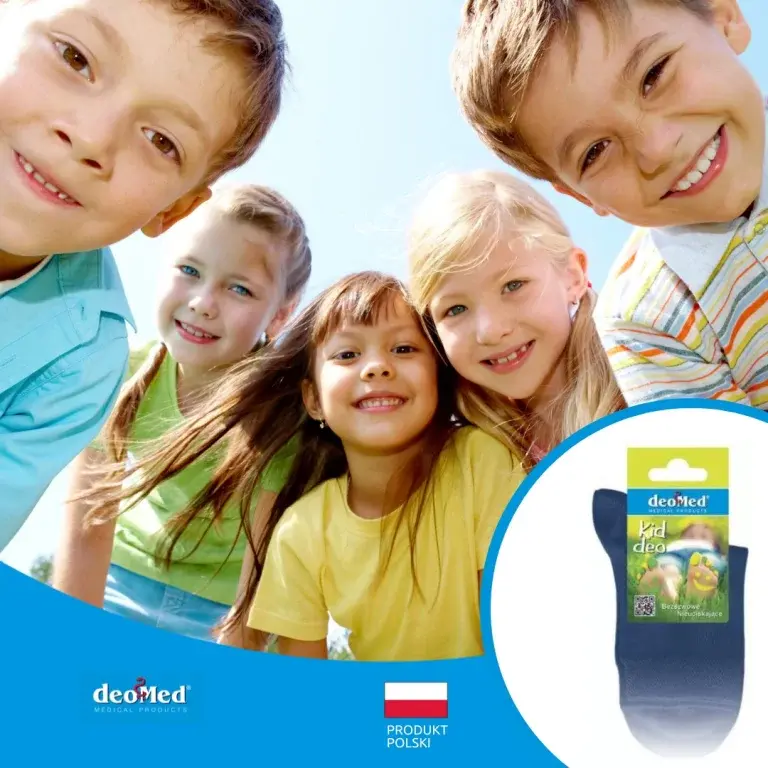
Many options are available on the market, but models combining all the advantages mentioned above deserve special attention. An example is seamless, non-compression socks Kid Deo from Deomed, made from combed cotton.
Thanks to special finishing they have antifungal and antibacterial properties, supporting treatment and prevention of foot infections. They also limit the risk of unpleasant odour caused by microorganisms developing in a warm, moist environment.
A child's health starts with the basics, and one of them is well-chosen socks. Seamless and non-compression models made from combed cotton with a special finish effectively protect delicate feet from chafing, microorganisms and unpleasant odour. Lack of bothersome compression supports freedom of movement and lets the youngest fully enjoy every form of activity.
So before you reach for the first pair at hand, consider whether the product provides proper ventilation, does not compress the feet and was created with health in mind. Good quality socks can retain their properties for a long time, and investing in children's comfort is definitely spending that pays off quickly — for example in the carefree smile of a child who has nothing to stop them from playing.