

Sweaty feet and sock materials: cotton, bamboo or merino wool?
Sweating is a natural process that helps regulate body temperature. When your feet sweat heavily, your skin can stay damp and develop an unpleasant odour. Prolonged dampness can cause discomfort, soften the outer layer of the skin (maceration) and make painful chafing more likely.</p> Can the right socks make your feet more comfortable? Yes. The type of fibre matters, as do the knit construction, fit, footwear and daily foot hygiene. Find out why feet sweat, how popular materials differ and what to look for when choosing socks.
Why do feet sweat?
The feet have many sweat glands. Your feet may sweat more during physical activity, in hot conditions, under stress or when you wear footwear that restricts airflow.
Sweat itself is odourless. Problems arise when moisture stays on the skin for a long time. The warm, damp environment inside a shoe provides ideal conditions for microorganisms to grow. Unpleasant odours develop as these microorganisms break down compounds in sweat.
When choosing socks, look for four key features:
- Moisture absorption. This is the fibres’ ability to absorb water.
- Moisture wicking and drying time. Both depend on the type of fibre and how the fabric is knitted.
- Breathability. Airflow depends on the knit, the thickness of the sock and the materials used in your shoes.
- Fit. Socks that are too tight or bunch up can increase friction and discomfort.
Sweating is a natural process that no sock material can stop. Choosing the right socks can make your feet more comfortable and affect how damp your skin feels.
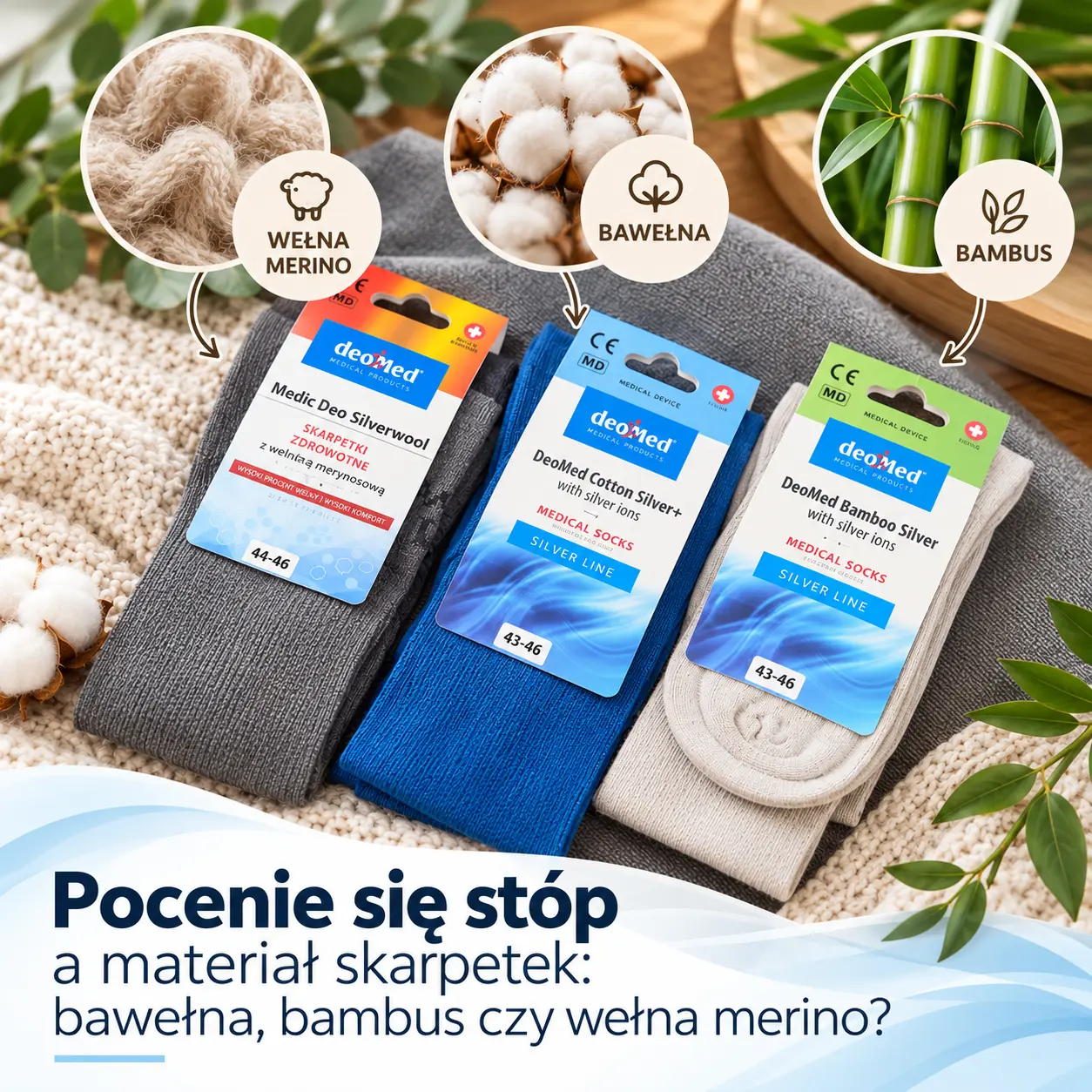
Cotton, bamboo viscose or merino wool? How do they differ?
Fibres differ in softness, absorbency, thermal properties and drying speed. The best choice depends on your needs.
1. Cotton – good absorbency, with drying times that vary
Cotton is valued for its softness and everyday comfort. It absorbs moisture well, though cotton knit can stay damp for a long time once wet. How quickly cotton socks dry depends on their thickness, knit structure and any other fibres in the blend.
2. Bamboo viscose – especially soft and gentle
Bamboo viscose is valued for its smooth feel, softness and ability to absorb moisture. It can be a good choice for people with sensitive skin who want a gentle fabric. Bamboo viscose can absorb a lot of moisture and still take time to dry. The full fibre blend and knit structure matter here too.
3. Merino wool – thermal comfort and moisture management
Merino wool is valued for its thermal properties. It absorbs moisture well and moves it away from the skin, so the fabric can absorb moisture before it starts to feel wet. It helps keep you comfortable in both cool and warmer weather, which is why it is used in sportswear and outdoor clothing. The performance of the finished product depends on its thickness, knit structure and fibre blend.
What do specialised fibres and finishes do?
Some socks use specialised fibres or finishes designed to limit the growth of certain microorganisms in the fabric or help control unpleasant odours.
Selected DEOMED® styles use fibres containing silver ions, zinc oxide or a Sanitized® finish. These technologies are intended to limit the growth of bacteria associated with odour and the risk of skin infections on the feet.
These technologies relate to three distinct effects:
- Limiting microbial growth in the fabric. This refers to how the technology works within the knit under specific conditions.
- Controlling unpleasant odours. This may involve reducing the activity of microorganisms that cause odour.
- Preventing skin infections. The antibacterial properties of the fabric may help prevent athlete’s foot or other infections.
Can socks prevent sweaty feet?
Sweating is a natural bodily function, and your skin continues to produce sweat while you wear socks. The right material can affect how comfortable your socks feel, how much moisture they absorb and how damp your skin feels. If your feet are often damp, start with a few simple steps. Change your socks regularly, wear shoes suited to the temperature and your activity, and dry your feet thoroughly after washing.
5 practical tips to reduce discomfort from sweaty feet
- Choose socks to suit the conditions. Match their thickness and fibre blend to the temperature, your footwear and your activity. The thickest or most absorbent socks may be less suitable in some conditions.
- Change your socks when they get damp. Prolonged contact with wet fabric can increase discomfort and contribute to irritation.
- Take care of your footwear. Choose shoes suited to the temperature and your activity. Let them dry thoroughly between wears.
- Dry your feet thoroughly. After washing, pay particular attention to the spaces between your toes.
- Check the fit. Choose socks that fit comfortably without squeezing, bunching up or causing chafing. The right size matters whatever the fibre.
If excessive sweating starts suddenly, is severe or occurs alongside itching and cracked skin, consult a doctor or podiatrist.
Explore the DEOMED® range of socks for foot health and find the style that best suits your needs.