

Seamless socks - why does the way they’re joined matter?
The seam in a sock is a small but important part of its construction. As you walk and go about your daily activities, your foot constantly shifts position, and the sock fabric moves with it. That’s why the way the fabric is joined around the toes can affect comfort, especially when socks are worn for long periods.
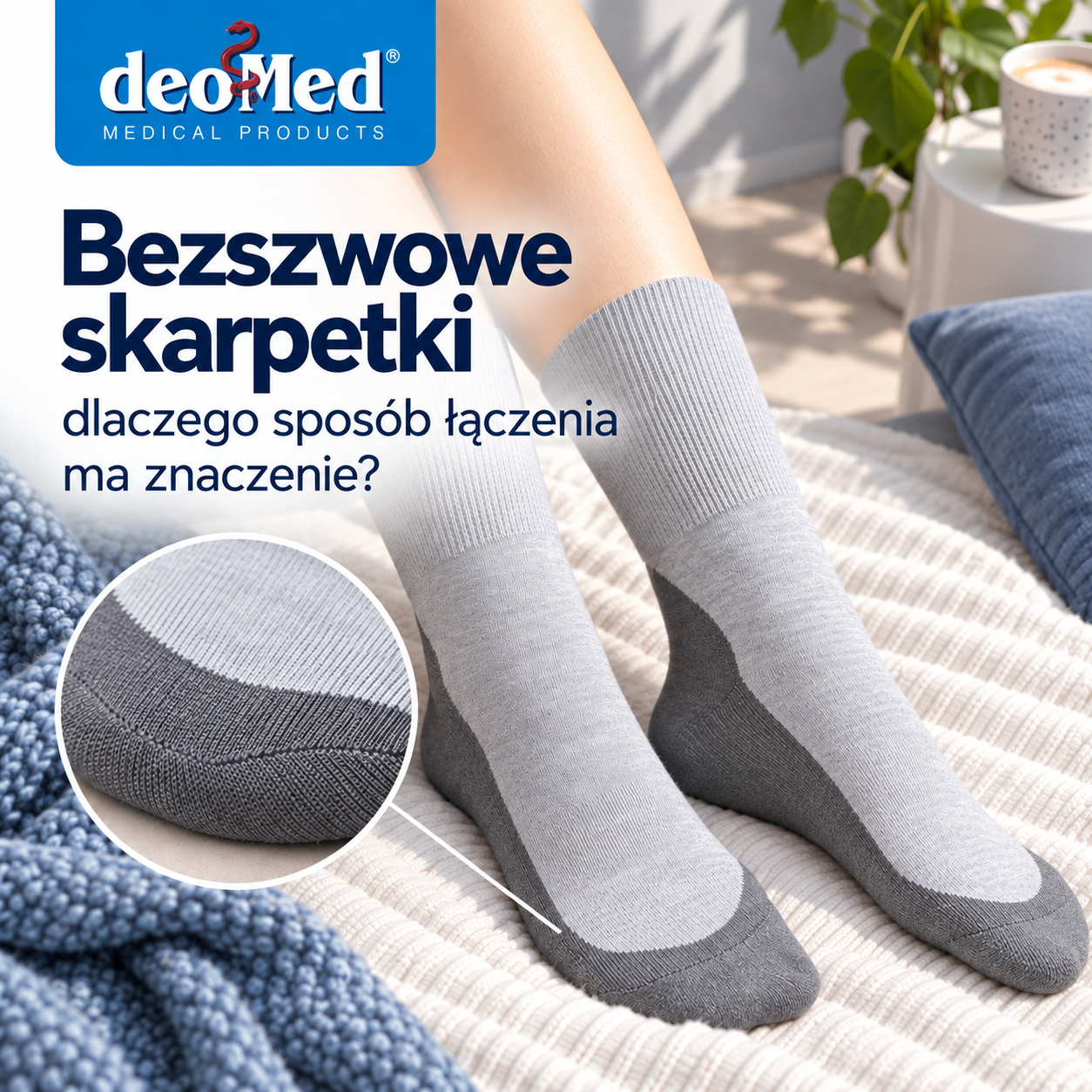
What does “seamless” mean?
How is a sock made? It starts as knitted fabric that needs to be shaped to fit the foot. The different parts of the sock are formed during production, and one important step is closing the toe area.
The way this closure is made determines whether it creates a noticeable seam. In conventional socks, the join forms a raised ridge that you can feel. If this ridge comes into contact with the toes, it may cause slight pressure or friction while walking.
The term “seamless” does not always mean that the sock has no joins at all. In practice, it refers to a manufacturing technique that creates thin, imperceptible joins in the toe area. The difference may be subtle to the eye but significant when worn.
Why does the toe closure matter?
Your feet make many repetitive movements as you walk. Your toes shift position, and your feet bend. If a noticeable ridge comes into contact with the skin, it may cause slight pressure or friction with every step. A single instance of contact is usually not a problem. What matters is the repetition, especially when socks are worn for many hours. Seamless toe construction therefore offers several advantages:
No noticeable ridge. The join does not form a pronounced edge.
Fewer potential friction points. A smooth join can reduce the number of features you can feel as your foot moves.
Greater comfort during extended wear. A difference that may be barely noticeable over a short period can become more significant after hours of walking.
This type of construction may be particularly important for people who:
- wear shoes for long periods,
- spend a lot of time walking or standing,
- have sensitive skin on their feet,
- have health conditions that make proper foot skin care and protection particularly important, such as neuropathy or diabetes,
- pay particular attention to the comfort of their footwear and clothing.
What should you look for?
For people with health conditions or sensitive skin, every element in direct contact with the skin deserves particular attention. An imperceptible join may reduce one potential pressure point. However, seamless construction alone does not address every aspect of foot comfort. The fabric, sock size, fit, cuff and individual skin sensitivity also matter. People with specific health concerns should consult a specialist when choosing suitable products.